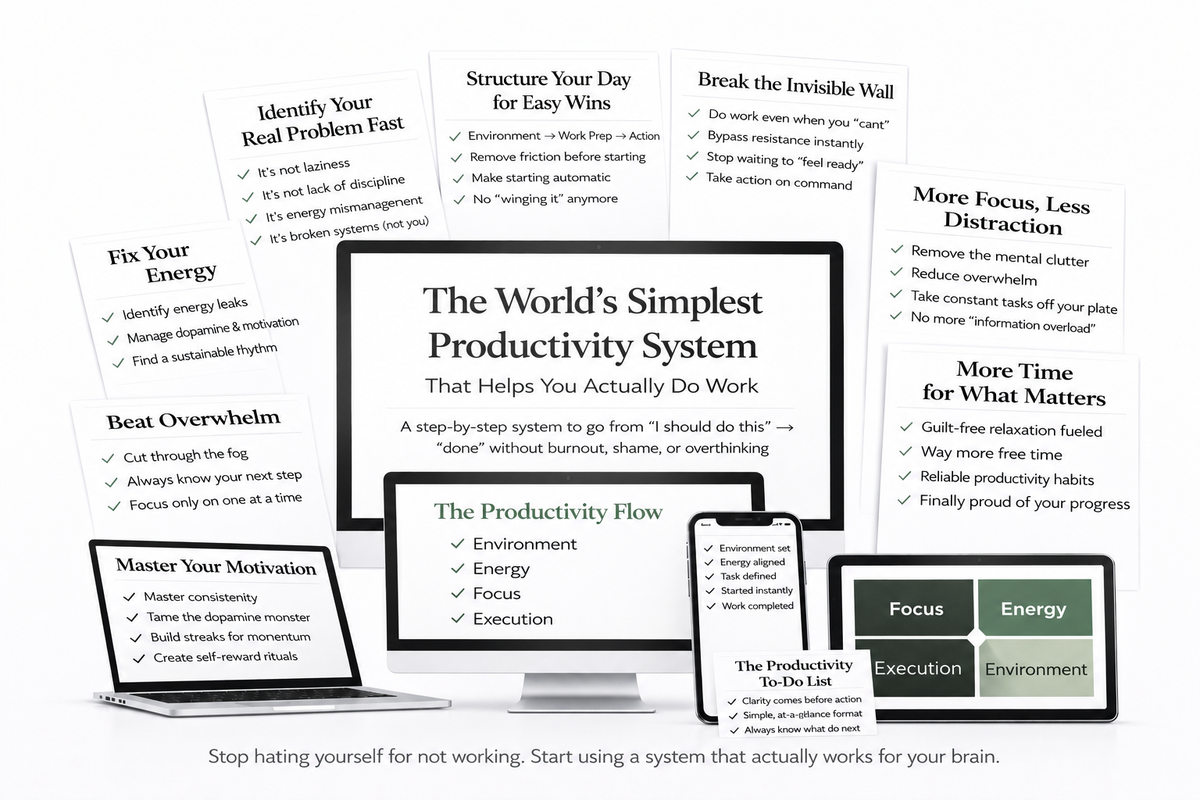

Description
World’s Simplest Productivity System: The Complete Guide to Getting More Done Without Feeling Overwhelmed
Introduction
Staying productive has become increasingly difficult in today’s fast-paced world. Endless notifications, overflowing to-do lists, constant emails, and multiple responsibilities often leave people feeling busy without making meaningful progress. Many productivity methods promise incredible results, but they often introduce unnecessary complexity that becomes difficult to maintain over time.
The World’s Simplest Productivity System takes a completely different approach. Instead of relying on dozens of apps, complicated planners, or rigid routines, it focuses on simplicity, consistency, and intentional action. The philosophy behind this system is that productivity should reduce stress rather than create it.
Whether you’re an entrepreneur, freelancer, student, business owner, or working professional, creating a simple and repeatable workflow can dramatically improve your efficiency. Rather than trying to do everything, this system helps you identify what truly matters and execute those tasks with clarity.
In this comprehensive guide, you’ll learn how a simplified productivity framework works, why it outperforms complicated methods, and how you can build a sustainable routine that helps you accomplish more while maintaining balance in your daily life.
What Is the World’s Simplest Productivity System?
The World’s Simplest Productivity System is a practical framework designed to eliminate unnecessary complexity from daily planning and task management. Instead of organizing hundreds of tasks across multiple applications, the system encourages users to focus only on the work that creates meaningful progress.
At its core, the system revolves around a few essential principles:
- Focus on priorities instead of quantity.
- Eliminate distractions before starting work.
- Complete important tasks before minor ones.
- Review progress consistently.
- Build habits that are easy to maintain.
Unlike traditional productivity methods that often become overwhelming after a few weeks, this approach emphasizes sustainability. Small improvements made consistently often produce better long-term results than ambitious systems that are difficult to follow.
Why Simplicity Improves Productivity
Many people believe that becoming productive requires advanced planning techniques, expensive software, or complicated workflows. In reality, complexity often creates friction.
When your productivity system becomes difficult to maintain, you spend more time organizing work than actually completing it.
Simple systems offer several advantages:
Reduced Decision Fatigue
Every decision consumes mental energy. When you have dozens of categories, labels, priorities, and folders, your brain becomes exhausted before meaningful work even begins.
A simplified workflow minimizes unnecessary choices, allowing you to focus your energy where it matters most.
Better Consistency
Consistency always outperforms perfection.
Simple routines are easier to repeat every day. Over weeks and months, these small consistent actions compound into remarkable results.
Instead of creating an elaborate schedule that lasts three days, a simple productivity framework can support long-term success.
Improved Focus
Modern distractions constantly compete for attention.
Social media notifications, emails, messaging apps, meetings, and endless browser tabs fragment concentration throughout the day.
The World’s Simplest Productivity System encourages uninterrupted focus by helping users identify their highest-priority work before anything else.
Lower Stress Levels
Many people confuse being busy with being productive.
Completing dozens of small tasks may create the illusion of progress while leaving important work unfinished.
By concentrating on fewer priorities, users experience greater clarity, lower anxiety, and improved confidence in their daily accomplishments.
Core Principles Behind the System
Although every individual can customize their workflow, most successful implementations follow several universal principles.
1. Define Your Most Important Task
Every day begins with identifying the single task that creates the greatest impact.
Instead of creating an overwhelming checklist of twenty items, ask yourself:
“If I complete only one task today, which one will make the biggest difference?”
This simple question immediately clarifies priorities.
2. Remove Distractions Before Starting
Productivity isn’t only about working harder.
It’s equally about removing obstacles.
Before beginning focused work:
- Silence unnecessary notifications.
- Close unrelated browser tabs.
- Put your phone away.
- Organize your workspace.
- Prepare everything required for the task.
Even small interruptions can significantly reduce concentration and increase the time needed to complete important work.
3. Work in Focused Sessions
Long hours do not always produce better results.
Research consistently shows that concentrated periods of focused work are far more effective than multitasking.
Many professionals divide their work into manageable focus sessions with short recovery breaks.
This approach helps maintain mental energy throughout the day while preventing burnout.
4. Keep Task Lists Small
Large to-do lists often become intimidating.
The World’s Simplest Productivity System recommends limiting daily priorities to only a few meaningful tasks.
Completing three important objectives is usually more valuable than partially finishing twenty minor ones.
A shorter list also creates psychological momentum as tasks are completed.
5. Review Your Progress Daily
Productivity is not only about execution.
Reflection is equally important.
At the end of each day, spend a few minutes asking:
- What did I accomplish today?
- What slowed me down?
- What should I improve tomorrow?
- Which task deserves my attention first?
Daily reviews help identify patterns and encourage continuous improvement.
Building Your Own Productivity Workflow
Creating a sustainable routine doesn’t require complicated planning.
Start with a few simple steps.
Morning Planning
Begin each day by reviewing your priorities.
Write down:
- Your most important task.
- Two supporting tasks.
- One personal objective.
- One health-related activity.
Keeping daily planning short prevents procrastination and encourages immediate action.
Deep Work Sessions
Schedule uninterrupted blocks dedicated to meaningful work.
During these sessions:
- Avoid checking email repeatedly.
- Turn off social media.
- Ignore non-urgent messages.
- Focus on one objective only.
Even two highly focused hours often outperform an entire day filled with interruptions.
Scheduled Breaks
Breaks improve productivity rather than reduce it.
Short pauses help restore concentration, reduce fatigue, and improve creativity.
Simple activities such as stretching, walking, or drinking water can refresh your mind before returning to work.
Organize Information Efficiently
Instead of saving notes across multiple apps, choose one reliable location for your ideas, projects, and references.
Keeping information organized reduces time spent searching for files and allows you to remain focused on execution instead of administration.
Common Productivity Mistakes to Avoid
Many people unknowingly reduce their effectiveness by following habits that seem productive but actually waste valuable time.
Some of the most common mistakes include:
Multitasking
Handling multiple tasks simultaneously often decreases accuracy, increases stress, and extends completion time.
Overplanning
Spending hours designing the perfect schedule rarely produces meaningful results.
Action always beats excessive planning.
Constant Email Checking
Checking inboxes every few minutes interrupts concentration and creates unnecessary context switching.
Instead, review emails during scheduled intervals.
Trying to Finish Everything
Not every task deserves equal attention.
Learning to prioritize is one of the most valuable productivity skills anyone can develop.


Reviews
There are no reviews yet.